


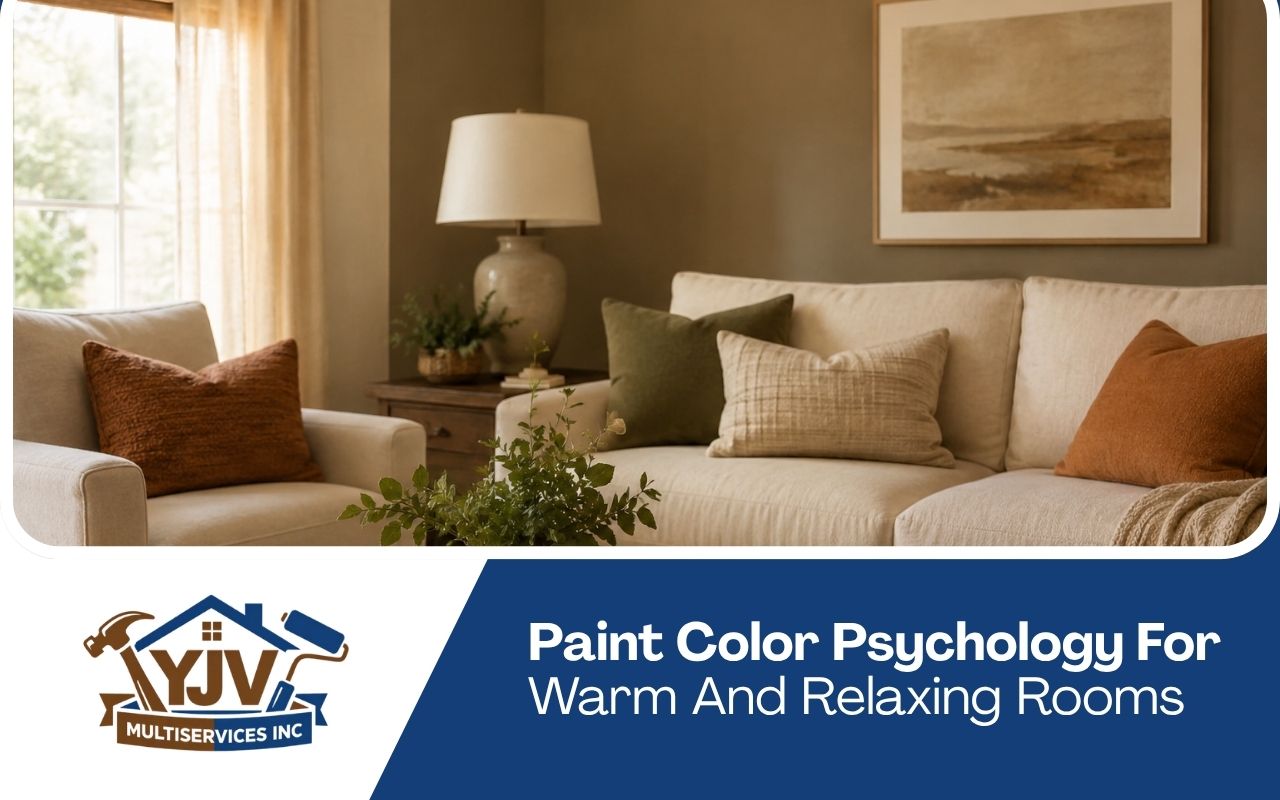
Paint Color Psychology For Warm And Relaxing Rooms
Paint color psychology can change how a room feels, works, and welcomes people each day. At YJV Multiservices Inc, we believe color should do more than cover walls. It should support comfort, style, and the way your family uses every space.
Therefore, choosing paint with care can make a bedroom calmer, a kitchen warmer, or an office more focused. With the right plan, each room can feel clear, balanced, and easy to enjoy.
Color Choices That Shape Daily Home Comfort
Paint color psychology is the study of how colors affect mood, comfort, and daily habits. Some shades feel peaceful, while others feel active or bold. Because of this, paint choices should match the purpose of each room.
For example, soft blues may help a room feel quiet, while yellow can bring a brighter feeling. A simple color mood guide can make these choices easier before painting begins.
Warm Paint Tones Bring Life Into Shared Rooms
Warm paint tones, such as red, orange, and yellow, can make shared spaces feel friendly and full of life. They work well in dining rooms, kitchens, and family areas where people gather and talk.
Soft yellow can make a room feel bright and cheerful.
Muted orange can add warmth without feeling too strong.
Deep red works best as a small accent.
However, balance matters. Too much warmth can feel heavy, so neutral trim, light furniture, or cooler decor can help the room stay comfortable.
Cool Colors Support Calm Focus And Rest
Paint color psychology also shows why cool colors often feel peaceful. Blue, green, and lavender can remind people of water, sky, and nature. As a result, they are strong choices for bedrooms, bathrooms, and quiet work areas.
Our team at YJV Multiservices Inc helps customers think about how each room should feel before choosing a shade. Lighter cool colors can feel airy, while deeper greens or teals can add calm depth.
Neutral Shades Create Balance Across Every Room
Neutral colors give a home a clean and flexible base. White, beige, taupe, and gray can help bold accents stand out without making the room feel crowded. They also make updates easier later.
Warm neutrals pair well with wood and earth tones.
Cool neutrals can make a space feel fresh and simple.
Layered textures can keep neutral rooms from feeling plain.
In addition, neutral walls can support both modern and classic styles. This makes them useful for homeowners who want a clean look that still feels personal.
Relaxing Interior Colors Make Personal Spaces Peaceful
Relaxing interior colors are ideal for spaces made for rest. Soft blue, gentle green, and muted lavender can help lower visual noise and create a slower feeling. These shades work well in bedrooms, reading areas, and quiet corners.
Calming wall colors feel even better with soft lighting, simple decor, and natural textures. For more help planning a smooth painting project, visit our painting services in Brandon FL.
Room By Room Paint Planning Feels More Natural
Each room has a different purpose, so each one deserves a thoughtful color plan. Kitchens can feel welcoming with warm paint tones, while offices may need fresh greens or soft yellows to support focus.
Bedrooms often work best with cool and quiet shades.
Bathrooms can feel spa-like with pale blue or seafoam green.
Living rooms can handle deeper colors with balanced lighting.
With YJV Multiservices Inc, we talk through room goals before paint is applied. This helps each color choice feel useful, not random.
Frequently Asked Questions
What is paint color psychology in home design?
Paint color psychology explains how wall colors can affect feelings, comfort, and behavior. It helps homeowners choose shades that match how each room should feel.
Which colors are best for a calm bedroom?
Soft blues, gentle greens, and muted lavenders are popular calming wall colors. They can help a bedroom feel restful and less busy.
Can warm colors make a room feel smaller?
Yes, some warm shades can make a room feel closer and cozier. However, lighter warm tones and good lighting can keep the space open.
How do I choose colors for my home?
Start with the room’s purpose, natural light, and furniture colors. Then use a color mood guide to compare shades that support your goals.
Should every room use the same color family?
No, but the colors should feel connected. Shared undertones, trim colors, or accent pieces can help different rooms flow together.
Thoughtful Paint Choices Create A Better Home
Paint color psychology gives homeowners a simple way to create rooms that feel right. It connects color with comfort, mood, and daily use. Therefore, the best shade is not only beautiful, but also helpful.
When customers contact YJV Multiservices Inc, we explain clear next steps and guide the painting process with care. To start planning your project, check out our contact page or review our home service options.